Description
What is Collie Eye Anomaly?
Collie Eye Anomaly (CEA), also known as Choroidal Hypoplasia (CH-Choroidal Hypoplasia), is inherited as an autosomal recessive disease. The retina gets its blood supply and nutrients from the choroid. In affected dogs, this layer of tissue under the retina does not develop properly and is thinner than normal. Predicting the severity of an affected puppy is difficult as it can vary greatly, even between affected puppies in the same litter. Severely-affected dogs may experience vision loss and retinal detachment.
Breeds that may be affected by the CEA Mutation
Aussiedoodle, Australian Shepherd, Bearded Collie, Border Collie, Boykin Spaniel, Collie, English Shepherd, Hokkaido, Lancashire Heeler, Longhaired Whippet, Miniature Australian Shepherd, Nova Scotia Duck Tolling Retriever, Rough Collie, Shetland Sheepdog, Silken Windhound, Smooth Collie, Toy Australian Shepherd.
Understanding Results
There are 3 possible genotypes reported for CEA:
- CLEAR: those having 2 copies of the normal allele and appear to be normal
- CARRIER: those having 1 copy of the normal allele and 1 copy of the mutation, but appear to be normal
- AFFECTED: those having 2 copies of the mutation and can develop eye and optic-nerve malformations, retinal detachment, and blindness over time
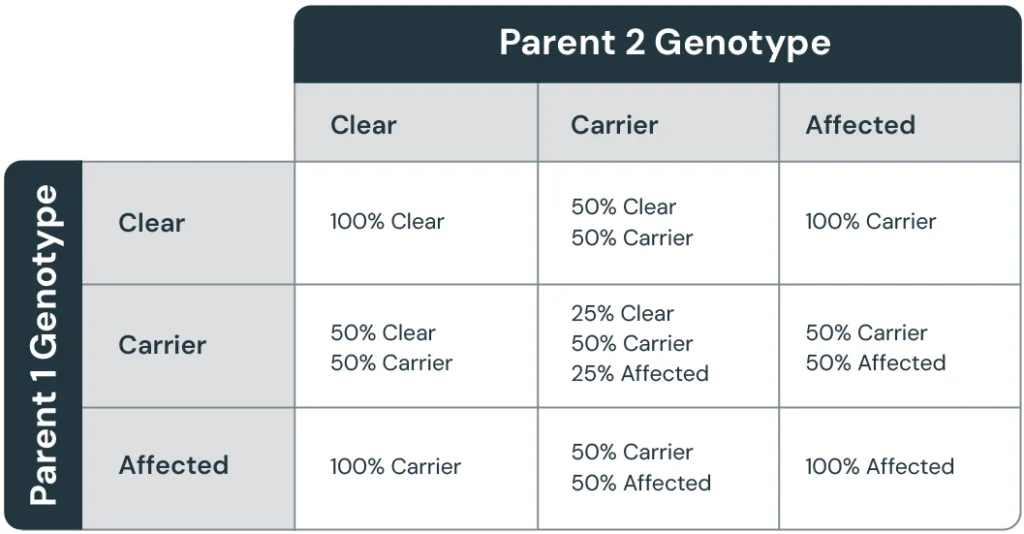
Although carriers do not show clinical signs of the disease, it is important to note that if used for breeding, carriers are likely to pass on the mutation 50% of the time. Therefore, a carrier (x) carrier mating is likely to result in producing affected pups in about 25% of the offspring.
Results are based upon the specific NHEJ1 mutation. Clear results for CEA only pertain to the NHEJ1 mutation tested. This test does not detect whether or not a dog has any other form of eye disease.
Have a question about dog DNA testing?
Get a free consultation with our animal genetics team.