Description
What is von Willebrand’s Disease Type 1?
There are three classifications of vWD that are based on the concentration and nature of plasma von Willebrand Factor. von Willebrand’s Disease Type 1 is characterized by abnormally low production of the protein found in the vWF blood, which is a key factor in the process of clotting a damaged blood vessel. This type of vWF is usually milder and more variable in form than the other types.
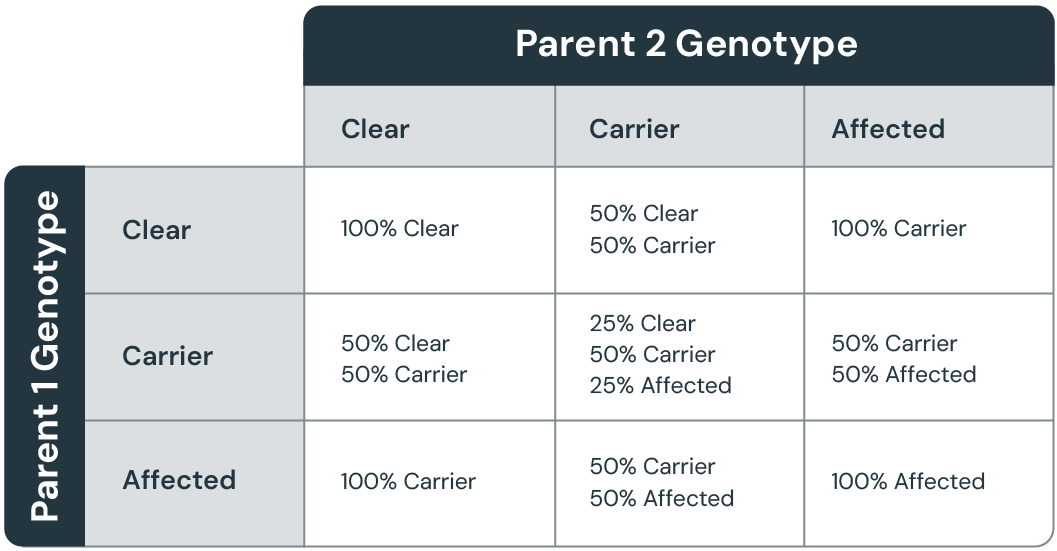
vWD is inherited as an autosomal recessive disorder. Therefore, dogs that carry one (1) copy of the vWD mutation may exhibit a reduction in the amount of plasma vWF, but are not likely to be symptomatic.
Breeds that may be affected by the vWD1 Mutation
Bernese Mountain Dog, Coton de Tulear, Doberman Pinscher, Drentsche Patrijschond, German Pinscher, Goldendoodle, Kerry Blue Terrier, Labradoodle, Manchester Terrier, Papillon, Pembroke Welsh Corgi, Poodle, Stabyhoun.
Understanding Results
There are 3 possible genotypes reported for Hyperuricosuria:
- CLEAR: those having 2 copies of the normal allele and appear to be normal
- CARRIER: those having 1 copy of the normal allele and 1 copy of the mutation, but appear to be normal
- AFFECTED: those having 2 copies of the mutation and are at risk of suffering a severe bleeding incident
Results are based upon the specific von Willebrand’s Type I mutation (c.7437G>A). Clear results for vWD I only pertain to the specific mutation tested. It will not detect if a dog has any other form of bleeding disorder.
Have a question about dog DNA testing?
Get a free consultation with our animal genetics team.